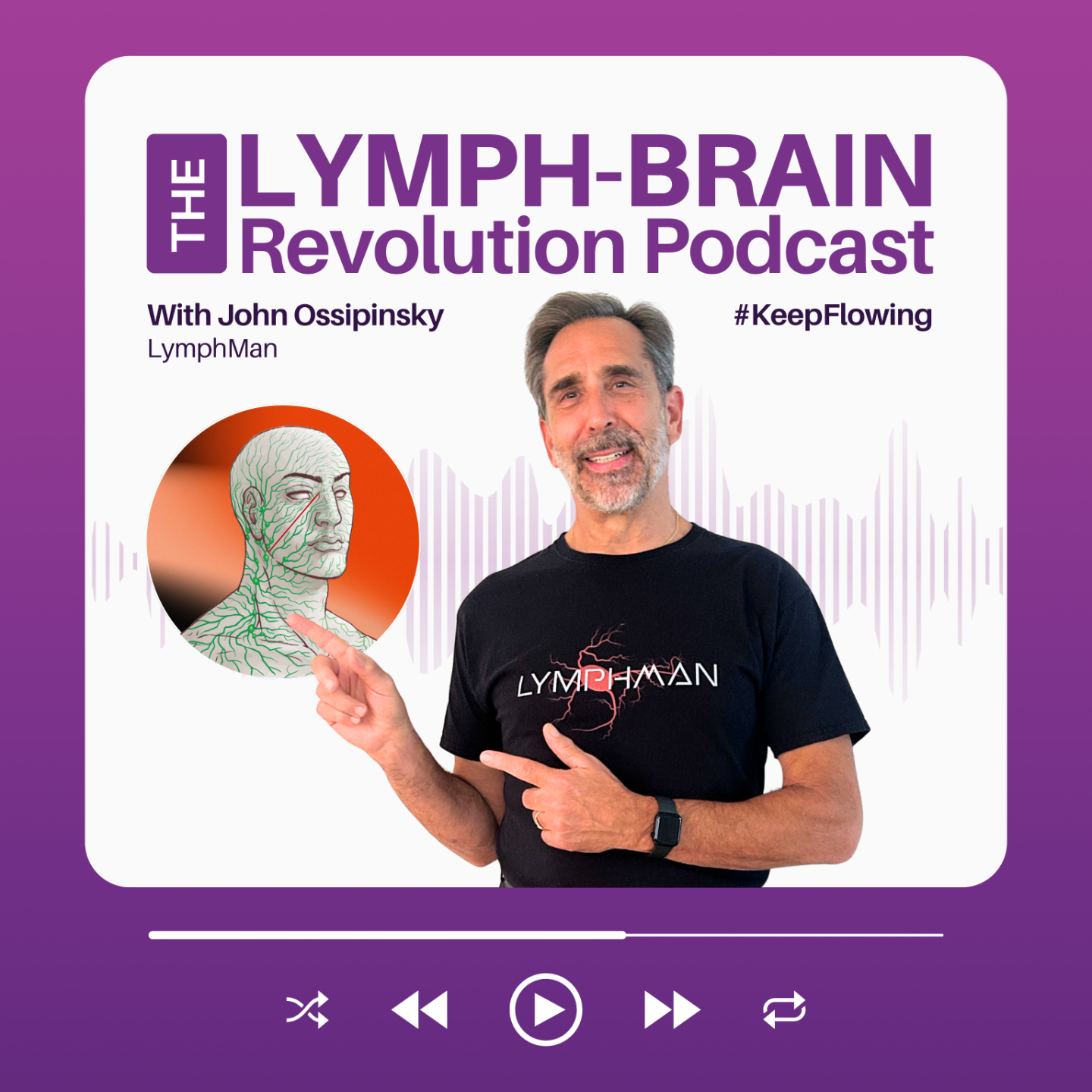
Episode 29: GLP-1 Drugs, Weight Loss & The Lymphatic System: What Happens When You Stop?
Part of The Lymph-Brain Revolution Podcast with
John Ossipinsky (LymphMan)
Published on: June 17, 2026
Season: 1 Episode: 29
Listen to This Episode
Episode Summary
What happens when you stop Ozempic, Wegovy, Mounjaro, or other GLP-1 medications?
Why do so many people regain the weight?
And what can you do now to improve your chances of keeping it off long-term?
In this episode, John Ossipinsky — LymphMan — explores the science behind GLP-1 medications, weight loss, obesity, inflammation, muscle loss, insulin resistance, and the lymphatic system.
Researchers have discovered that while GLP-1 medications can produce significant weight loss, many individuals regain a substantial portion of that weight after discontinuing treatment.
This episode explores one powerful idea:
👉 The goal isn't simply to lose weight... it's to create a body that doesn't want the weight back.
At its core, this episode explores how obesity, inflammation, metabolic health, and lymphatic function may influence long-term success after GLP-1 medications.
🔑 Key Takeaways From This Episode
• GLP-1 medications may help reduce appetite, cravings, and food noise
• Many people regain weight after stopping GLP-1 treatment
• Obesity and lymphatic dysfunction may influence one another
• Inflammation, insulin resistance, and metabolic stress can affect long-term weight control
• Muscle loss during weight loss may impact metabolism and healthy aging
• Movement, breathing, posture, hydration, sleep, and exercise support lymphatic flow
• The medication may help create the opportunity, but lifestyle determines what happens next
• The LymphMan Exit Strategy focuses on preserving muscle, improving lymph flow, and creating a healthier cellular environment
In This Episode, You’ll Learn
• How GLP-1 medications work
• Why many people regain weight after stopping
• The connection between obesity and lymphatic dysfunction
• Why muscle loss matters during weight loss
• How inflammation affects metabolic health
• The importance of insulin sensitivity
• Simple habits that support long-term success
• The LymphMan Exit Strategy
• How to create a body that doesn't want the weight back
Timestamps
00:00 — GLP-1 Drugs & The Weight Loss Revolution
02:45 — What GLP-1 Medications Actually Do
06:30 — Appetite, Cravings & Food Noise
10:45 — What I’ve Observed Helping Clients
15:30 — Obesity & Lymphatic Dysfunction
21:00 — Why GLP-1 Drugs Changed Weight Loss
26:30 — The Research: What the Studies Found
32:15 — Why Many People Regain Weight After Stopping
37:00 — The Hidden Issue of Muscle Loss
41:15 — Inflammation, Insulin Resistance & Metabolic Health
45:00 — Exercise, Muscle & Long-Term Success
48:00 — The LymphMan Exit Strategy
50:15 — Key Takeaways & Closing Message
Studies Mentioned
- Obesity-Induced Lymphatic Dysfunction Is Reversible With Weight Loss
- Hidden Reason Ozempic Doesn't Work for Everyone
- The Dark Side of GLP-1 Drugs: Scientists Reveal Hidden Cost of Weight Loss Medications
- STEP 1 Trial: Once-Weekly Semaglutide in Adults with Overweight or Obesity
- Weight Regain and Cardiometabolic Effects After Withdrawal of Semaglutide
- Eliminating Senescent Cells Improves Metabolism and Diabetes
- People Can Prevent Type 2 Diabetes Despite Genetic Risk
- Exercise and Preservation of Lean Mass During Weight Loss
Resources & Links
- Check out a PDF of John's book, An Undetected Acid-Alkaline Imbalance
- Download the Free Lymphatic Health Guide
- Learn About Lymphatic Health Coaching & Sessions
- Lymphatic Detox Courses
- Client Success Testimonials
- Contact John / Ask a Question
- Follow on Instagram: @lymphman
- Podcast Hub Page: See all episodes
Enjoyed This Episode?
If this episode helped you understand your health and the lymphatic system better, please:
✔ Subscribe on your favorite podcast platform
✔ Leave a review where you listen to the podcast — it helps others discover the show
✔ Share this episode with someone who needs it
Together, we’re Changing World Health — One Lymphatic System at a Time.
Keep Flowing 💚 — @LymphMan
The information shared on this podcast and website is for educational and informational purposes only and is not intended as medical advice. It is not a substitute for professional medical diagnosis, treatment, or care. Always consult your physician or qualified healthcare provider regarding any medical condition or health concern.