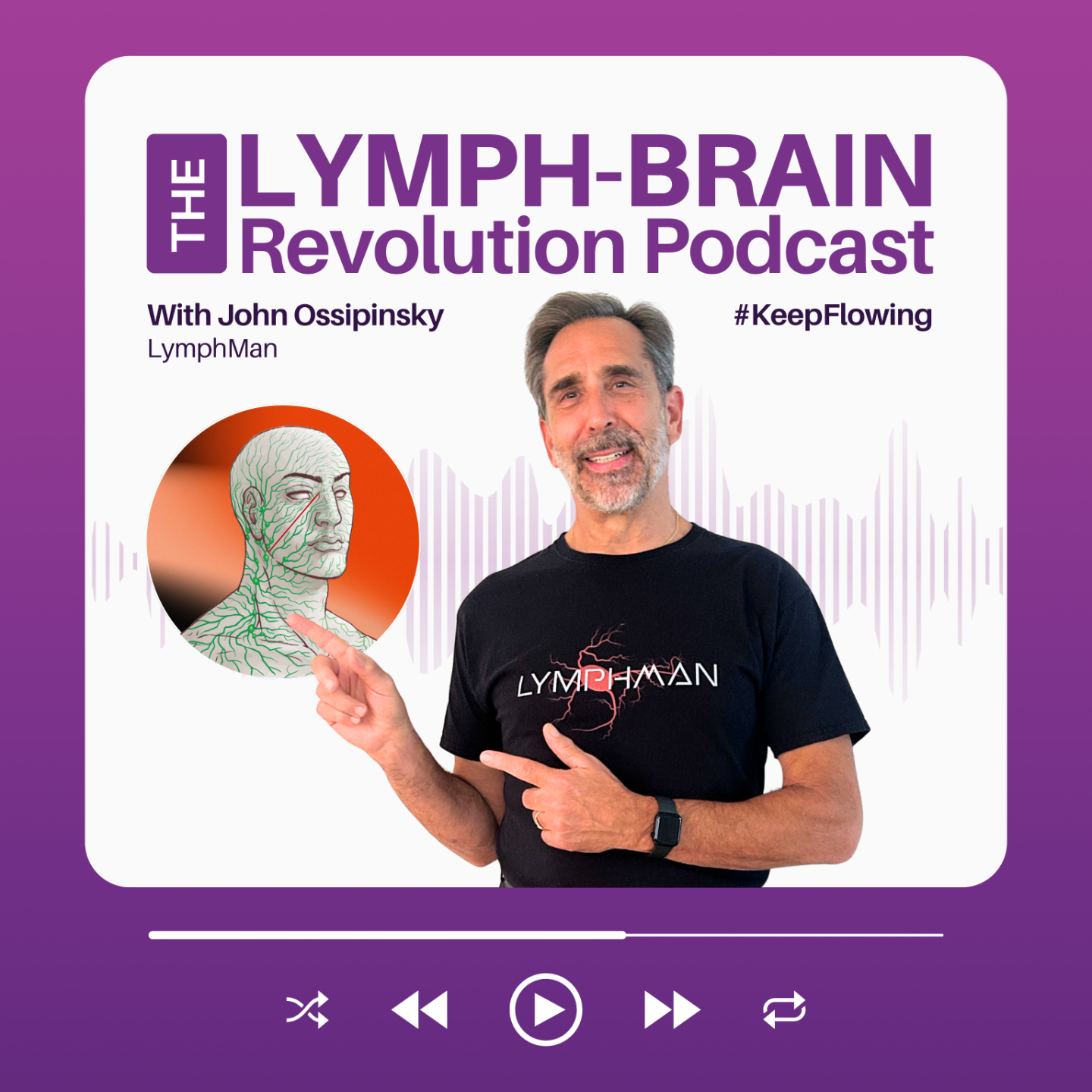
Episode 30: Acne, Anxiety, Brain Fog, Inflammation, & The Lymphatic System
Part of The Lymph-Brain Revolution Podcast with
John Ossipinsky (LymphMan)
Published on: June 24, 2026
Season: 1 Episode: 30
Listen to This Episode
Episode Summary
Why do so many people struggle with acne despite using medications, skin products, and following conventional advice?
Could acne be about more than clogged pores, excess oil, and bacteria?
In this episode, John Ossipinsky (LymphMan) explores the science behind acne, anxiety, depression, brain fog, inflammation, stress, blood sugar regulation, hormones, the gut-brain-skin axis, and the lymphatic system.
Researchers now recognize that acne is increasingly being viewed as an inflammatory condition that may involve multiple systems throughout the body.
This episode examines how factors such as stress, blood sugar regulation, the microbiome, hormones, tissue health, and lymphatic function may influence the environment within the skin.
You'll also learn about the often-overlooked role of the superficial lymphatic system, the history of Manual Lymph Drainage (MLD), and why healthy lymphatic flow may be one piece of the acne conversation worth exploring.
👉 The goal isn't simply clearer skin.
👉 It's creating a healthier environment for the skin to function and heal.
From a LymphMan perspective, acne may not have a single cause.
Instead, it may reflect multiple influences throughout the body that affect inflammation, tissue health, and overall function.
The goal is not simply to treat acne, but to create healthier conditions within the body that support healthier skin.
🔑 Key Takeaways From This Episode
• Acne is increasingly viewed as an inflammatory condition
• Acne can affect mental health, confidence, and quality of life
• Blood sugar, insulin, hormones, stress, and the microbiome may influence acne
• The gut-brain-skin axis highlights important connections throughout the body
• Skin contains an extensive network of lymphatic vessels that help regulate inflammation and maintain tissue health
• The superficial lymphatic system plays an important role in supporting skin health
• Deep breathing, movement, sleep, hydration, and a greener diet may help support lymphatic flow, reduce inflammation, and promote healthier skin
• The goal is not simply treating symptoms, but creating healthier conditions within the body
In This Episode, You’ll Learn
• Why acne is more than a cosmetic concern
• The connection between acne, anxiety, depression, and brain fog
• How blood sugar and insulin may influence skin health
• What researchers have discovered about the gut-brain-skin axis and its connection to inflammation
• Why stress can contribute to acne flare-ups
• The benefits and limitations of common acne treatments
• What researchers have discovered about skin lymphatics and inflammation
• Practical LymphMan strategies that may help support healthier skin
Timestamps
00:00 — Acne Is More Than a Skin Problem
03:30 — Acne, Anxiety, Depression & Quality of Life
08:30 — Blood Sugar, Insulin & Acne
13:00 — The Brain-Skin Axis, Stress & Brain Fog
20:30 — The Gut-Brain-Skin Axis
27:30 — Why Acne Treatment Is Changing
34:00 — Isotretinoin: Benefits, Risks & Controversy
37:30 — Skin Lymphatics and Tissue Health
40:30 — Magnesium, Stress & Skin Health
42:30 — Practical LymphMan Strategies
44:00 — Key Takeaways & Closing Message
Studies Mentioned
- Risk of depression among patients with acne in the U.K.: a population-based cohort study
- Potential Role of the Microbiome in Acne: A Comprehensive Review
- Evidence for Acne-Promoting Effects of Milk and Other Insulinotropic Dairy Products
- Acne vulgaris, probiotics and the gut-brain-skin axis: from anecdote to translational medicine
- Acne vulgaris: A review of the pathophysiology, treatment, and recent nanotechnology based advances
- Use of isotretinoin and risk of depression in patients with acne: a systematic review and meta-analysis
- Unlocking the Power of Magnesium: Applications in Dermatology
Resources & Links
- Check out a PDF of John's book, An Undetected Acid-Alkaline Imbalance
- Download the Free Lymphatic Health Guide
- Learn About Lymphatic Health Coaching & Sessions
- Lymphatic Detox Courses
- Client Success Testimonials
- Contact John / Ask a Question
- Follow on Instagram: @lymphman
- Podcast Hub Page: See all episodes
Enjoyed This Episode?
If this episode helped you understand your health and the lymphatic system better, please:
✔ Subscribe on your favorite podcast platform
✔ Leave a review where you listen to the podcast — it helps others discover the show
✔ Share this episode with someone who needs it
Together, we’re Changing World Health — One Lymphatic System at a Time.
Keep Flowing 💚 — @LymphMan
The information shared on this podcast and website is for educational and informational purposes only and is not intended as medical advice. It is not a substitute for professional medical diagnosis, treatment, or care. Always consult your physician or qualified healthcare provider regarding any medical condition or health concern.