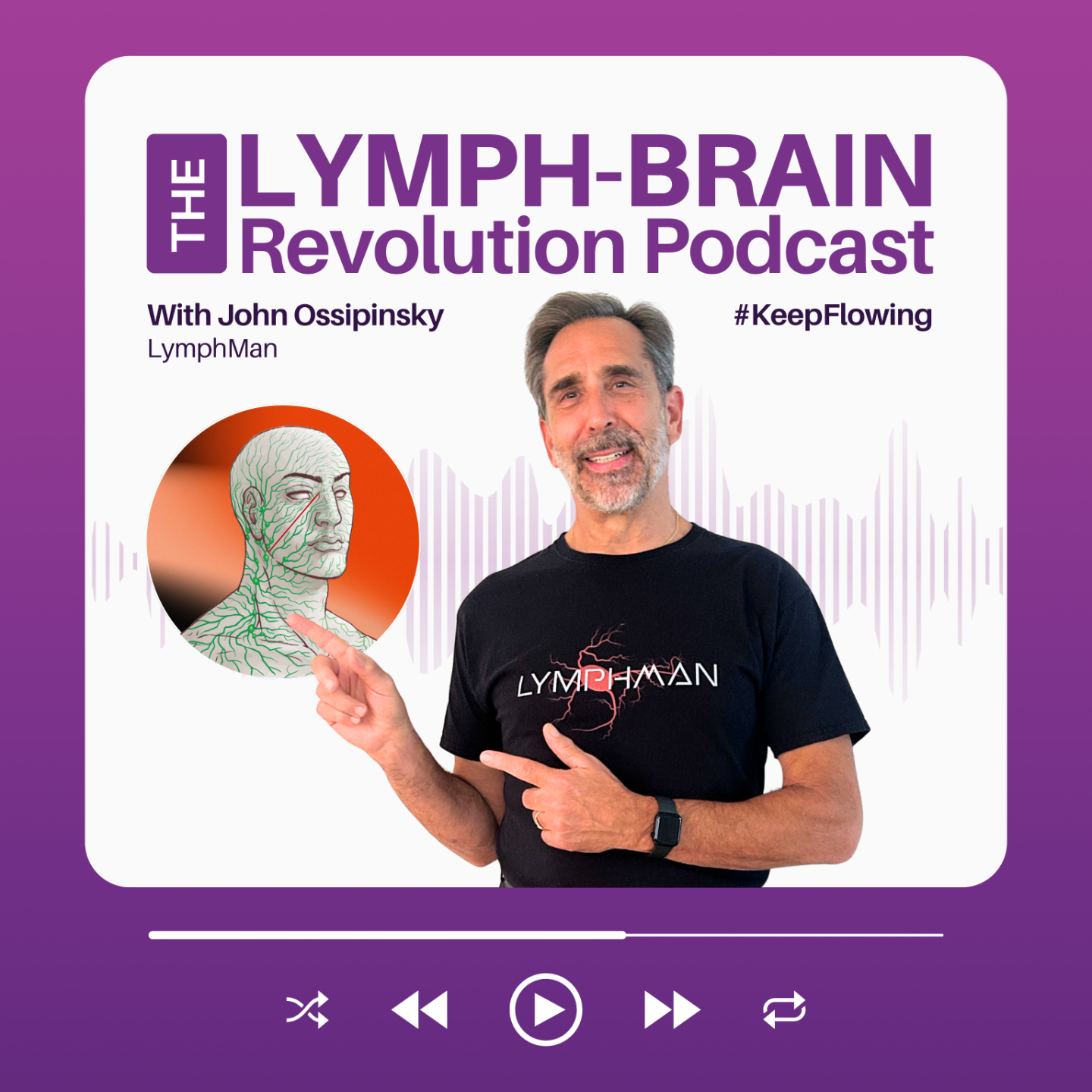
Episode 31: Lymphoma & The Lymphatic System: Supporting Recovery
Part of The Lymph-Brain Revolution Podcast with
John Ossipinsky (LymphMan)
Published on: July 1, 2026
Season: 1 Episode: 31
Listen to This Episode
This episode is for educational purposes only and is not intended to diagnose, treat, cure, or prevent any disease. Always work with your healthcare provider regarding medical decisions.
Episode Summary
Lymphoma begins in the lymphatic system, an important part of the immune system. But today, researchers are looking beyond the cancer cells themselves and studying the tumor microenvironment, immune communication, inflammation, and cellular health to better understand how lymphoma develops and responds to treatment.
In this episode, John Ossipinsky (LymphMan) explores Hodgkin and Non-Hodgkin lymphoma, CAR T-cell therapy, cytokine release syndrome, ICANS, chemo brain, senescent cells, and emerging research on magnesium. You’ll also learn practical ways to support healthy lymphatic function and the body’s normal physiology during treatment and recovery.
👉 Improving lymphatic function is not a treatment for lymphoma, but supporting movement, relaxed deep breathing, nutrition, hydration, sleep, and healthy lymphatic function can be important for maintaining quality of life throughout treatment and recovery.
🔑 Key Takeaways From This Episode
- Lymphoma is a cancer involving lymphocytes, immune cells found throughout the lymphatic system.
- Hodgkin and Non-Hodgkin lymphoma are different groups of lymphoma with different characteristics and treatments.
- Researchers are increasingly studying the tumor microenvironment and communication between lymphoma cells and surrounding immune cells.
- CAR T-cell therapy demonstrates how the immune system can be redirected to attack certain lymphoma cells.
- Cytokine release syndrome and ICANS demonstrate how powerful immune activation can also affect inflammation and the brain.
- Emerging research is examining senescent cells and magnesium in lymphoma, although more research is needed.
- Supporting movement, relaxed deep breathing, nutrition, hydration, sleep, and healthy lymphatic function can help support normal physiology and quality of life during treatment and recovery.
In This Episode, You’ll Learn
- What lymphoma is and why it involves the lymphatic system
- Hodgkin vs. Non-Hodgkin lymphoma
- Why the tumor microenvironment matters
- How lymphoma interacts with the immune system
- How CAR T-cell therapy is changing lymphoma treatment
- What CRS, ICANS, and chemo brain are—and why they can occur
- The emerging science on inflammation, senescent cells, and magnesium
- Practical ways to support healthy lymphatic function and quality of life during treatment and recovery
Timestamps
00:00 — Welcome & Why the Lymphatic System Matters
03:15 — What Is Lymphoma?
08:45 — Understanding the Lymphatic System
15:00 — Hodgkin vs. Non-Hodgkin Lymphoma
21:00 — The Tumor Microenvironment
27:00 — How Lymphoma Communicates with the Immune System
31:30 — Lymphatic Health Coaching
33:30 — CAR T-Cell Therapy: Teaching the Immune System to Fight
38:30 — Cytokine Release Syndrome (CRS)
42:30 — Chemo Brain, ICANS & Brain Health
48:00 — Senescent Cells, Magnesium & Supporting Recovery
54:30 — Key Takeaways & Closing Message
Studies Mentioned
- Cytokine Release Syndrome
- Microenvironment Cell Contribution to Lymphoma Immunity
- Stress-Induced Premature Senescence Promotes Proliferation by Activating the SENEX and p16INK4a/Retinoblastoma (Rb) Pathway in Diffuse Large B-Cell Lymphoma
- Stress-Induced Premature Senescence Activated by the SENEX Gene Mediates Apoptosis Resistance of Diffuse Large B-Cell Lymphoma via Promoting Immunosuppressive Cells and Cytokines
- Low Magnesium Levels and Prognosis in Newly Diagnosed Diffuse Large B-Cell Lymphoma
- Hypomagnesemia in Lymphoma Patients Receiving CAR T Therapy Correlates With Immune Dysfunction and Decreased Survival
- Magnesium Sensing via LFA-1 Regulates CD8+ T Cell Effector Function
Resources & Links
- Check out a PDF of John's book, An Undetected Acid-Alkaline Imbalance
- Download the Free Lymphatic Health Guide
- Learn About Lymphatic Health Coaching & Sessions
- Lymphatic Detox Courses
- Client Success Testimonials
- Contact John / Ask a Question
- Follow on Instagram: @lymphman
- Podcast Hub Page: See all episodes
Enjoyed This Episode?
If this episode helped you understand your health and the lymphatic system better, please:
✔ Subscribe on your favorite podcast platform
✔ Leave a review where you listen to the podcast — it helps others discover the show
✔ Share this episode with someone who needs it
Together, we’re Changing World Health — One Lymphatic System at a Time.
Keep Flowing 💚 — @LymphMan
The information shared on this podcast and website is for educational and informational purposes only and is not intended as medical advice. It is not a substitute for professional medical diagnosis, treatment, or care. Always consult your physician or qualified healthcare provider regarding any medical condition or health concern.