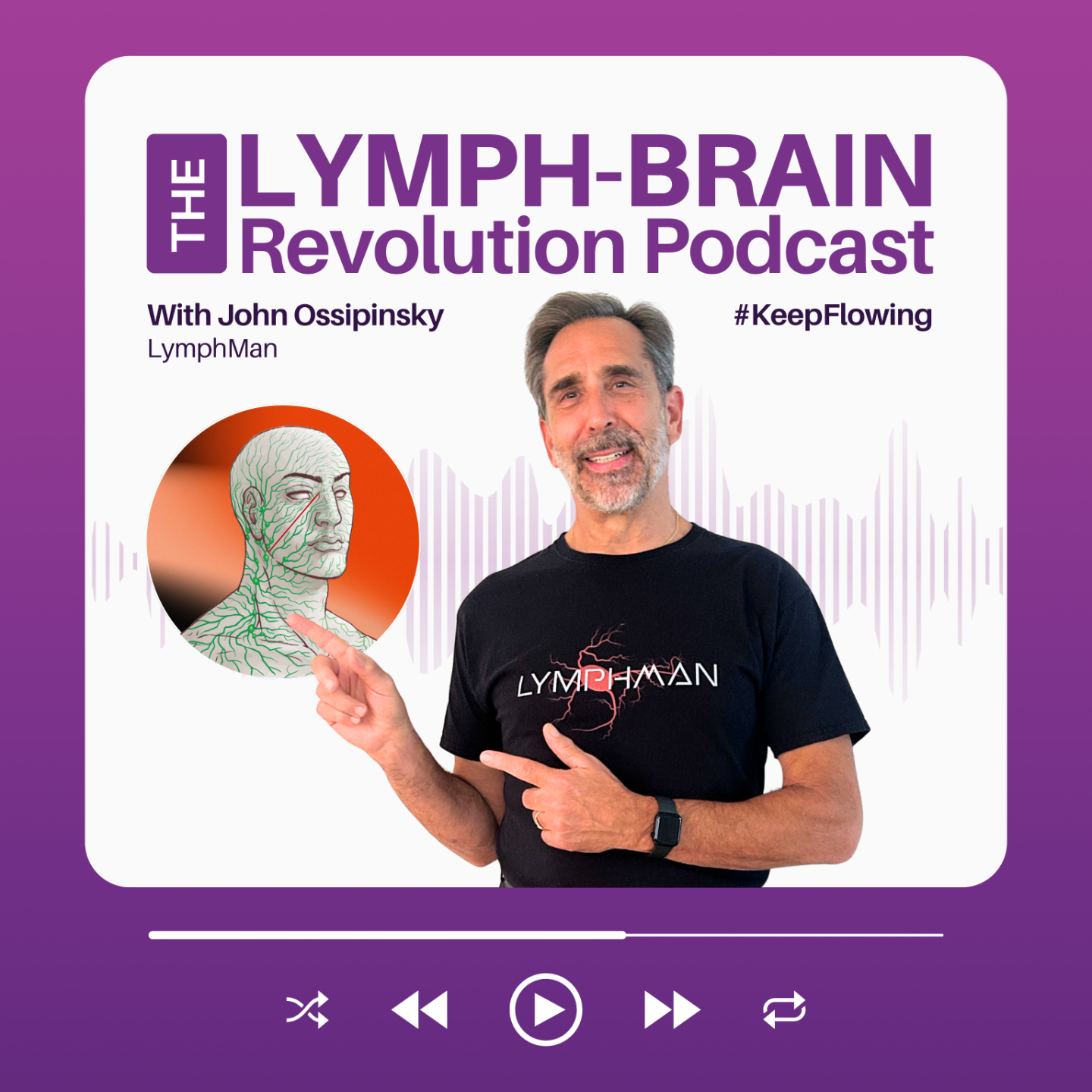
Episode 36: Hashimoto's Disease: Why Some People Progress While Others Don't
Part of The Lymph-Brain Revolution Podcast with
John Ossipinsky (LymphMan)
Published on: August 5, 2026
Season: 1 Episode: 36
Listen to This Episode
This episode is for educational purposes only and is not intended to diagnose, treat, cure, or prevent any disease. Always work with your healthcare provider regarding medical decisions.
Episode Summary
Millions of people have Hashimoto's disease, yet it doesn't progress the same way in everyone.
Some people have thyroid antibodies for years without developing significant thyroid damage. Others gradually lose thyroid function until they require lifelong thyroid hormone replacement.
Why does that happen?
In this episode, John Ossipinsky (LymphMan) explores the latest research on Hashimoto's disease, chronic inflammation, fibrosis, and the emerging role of the lymphatic system in maintaining healthy tissues.
You'll discover why Hashimoto's disease is much more than simply a thyroid disorder. It's a story about the immune system, tissue repair, and the remarkable systems that work together to support thyroid health.
John also explains practical daily habits that can help support your thyroid, your lymphatic system, and your overall health.
👉 The thyroid doesn't work alone. Neither does the rest of your body.
🧠 Key Takeaways
- Hashimoto's disease is the leading cause of hypothyroidism.
- Thyroid antibodies don't always lead to thyroid failure.
- Chronic inflammation can gradually change thyroid tissue over time.
- Research shows the lymphatic system helps regulate inflammation and maintain healthy tissues.
- Daily habits can help support thyroid health and your body's normal physiology.
In This Episode, You’ll Learn
- Why Hashimoto's disease progresses differently from one person to another
- How the immune system attacks the thyroid and why thyroid antibodies don't tell the whole story
- What fibrosis is and how scar tissue can gradually replace healthy thyroid tissue
- The role of the thyroid's lymphatic vessels in supporting immune regulation and healthy tissues
- What current research says about the lymphatic system's role in Hashimoto's disease—and what it has not yet proven
- Practical daily habits that can support thyroid health, lymphatic function, and overall well-being
Timestamps
00:00 – Why Does Hashimoto's Progress Differently?
05:27 – Hashimoto's Disease Explained
15:03 – Why the Immune System Attacks the Thyroid
20:39 – Can the Autoimmune Attack Be Stopped?
23:00 – How to Learn More
24:05 – Why Some People Progress
29:06 – Fibrosis & the Lymphatic System
38:58 – Supporting Your Thyroid Every Day
46:26 – Key Takeaways & Closing Message
Studies Mentioned
- Hashimoto Thyroiditis: An Evidence-Based Guide to Etiology, Diagnosis and Treatment
- The Emerging Importance of Lymphatics in Health and Disease: An NIH Workshop Report
- Inflammation and Lymphatic Function
- Immune cell senescence in autoimmunity: implications for disease pathogenesis and therapeutic targeting
- Hashimoto Thyroiditis: An Evidence-Based Guide to Etiology, Diagnosis and Treatment
- Effects of Different Supplements on Hashimoto's Thyroiditis: A Systematic Review and Network Meta-Analysis
Resources & Links
- Check out a PDF of John's book, An Undetected Acid-Alkaline Imbalance
- Download the Free Lymphatic Health Guide
- Learn About Lymphatic Health Coaching & Sessions
- Lymphatic Detox Courses
- Client Success Testimonials
- Contact John / Ask a Question
- Follow on Instagram: @lymphman
- Podcast Hub Page: See all episodes
Enjoyed This Episode?
If this episode helped you understand your health and the lymphatic system better, please:
✔ Subscribe on your favorite podcast platform
✔ Leave a review where you listen to the podcast — it helps others discover the show
✔ Share this episode with someone who needs it
Together, we’re Changing World Health — One Lymphatic System at a Time.
Keep Flowing 💚 — @LymphMan
The information shared on this podcast and website is for educational and informational purposes only and is not intended as medical advice. It is not a substitute for professional medical diagnosis, treatment, or care. Always consult your physician or qualified healthcare provider regarding any medical condition or health concern.