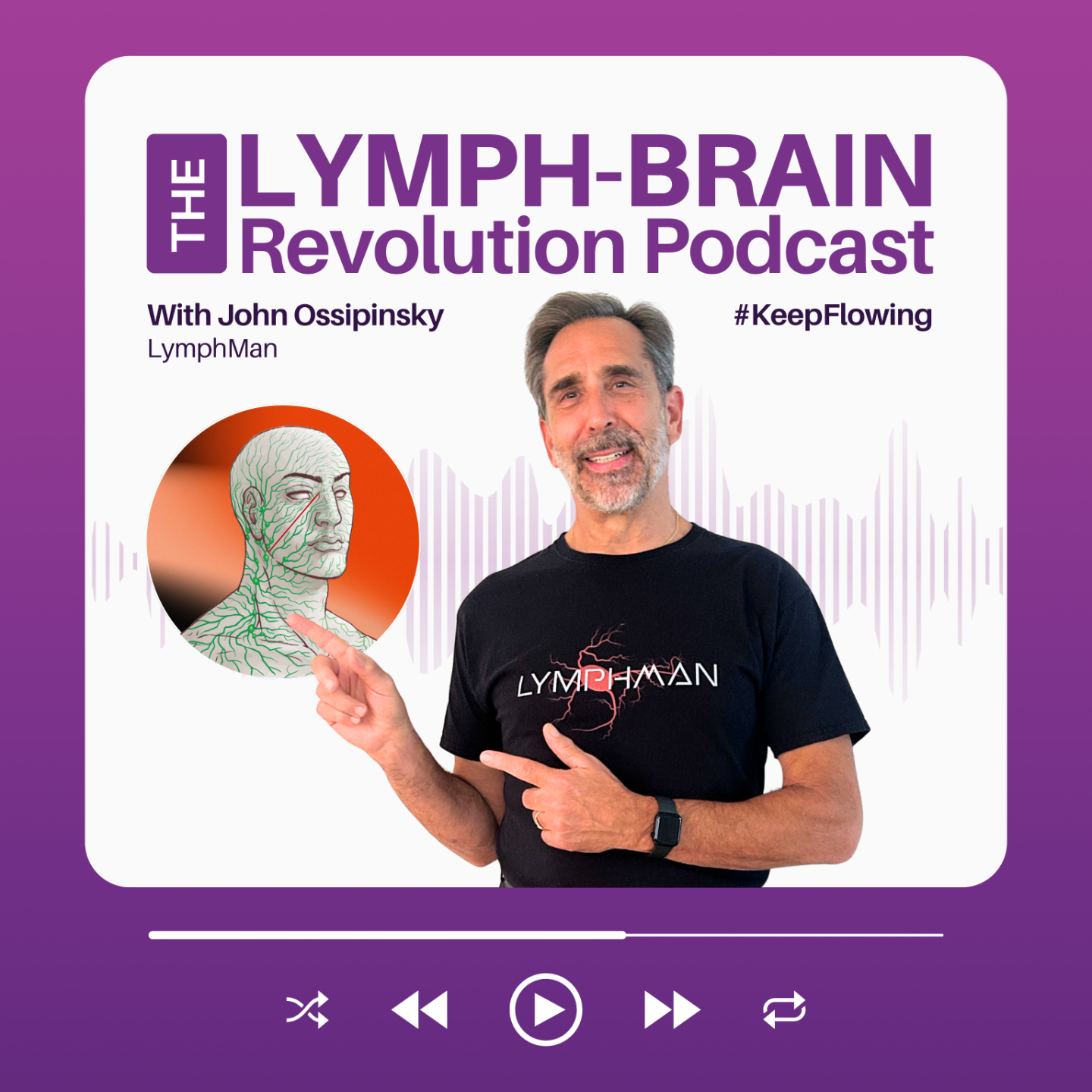
Episode 42: Restorative Sleep: How Sleep Supports a Healthier Brain
Part of The Lymph-Brain Revolution Podcast with
John Ossipinsky (LymphMan)
Published on: September 16, 2026
Season: 1 Episode: 42
Listen to This Episode
This episode is for educational purposes only and is not intended to diagnose, treat, cure, or prevent any disease. Always work with your healthcare provider regarding medical decisions.
Episode Summary
What if one reason you don't feel restored after sleeping isn't simply how many hours you slept—but what was happening inside your brain during those hours?
In Episode 42, John Ossipinsky (LymphMan) explores the science of restorative sleep and what happens inside your brain while you sleep, including changes in brain waves, blood flow, cerebrospinal fluid movement, breathing, and sleep architecture.
John also shares his personal experience with sleep apnea and explains why being asleep isn't necessarily the same as getting restorative sleep. You'll learn how aging and disrupted sleep can affect the brain and why fluid leaving the brain eventually connects with lymphatic drainage pathways and cervical lymph nodes in the neck.
Research is also revealing how chronically disrupted sleep can affect processes associated with cellular aging, reinforcing why the quality of our sleep can matter far beyond simply feeling tired the next day.
👉 The bigger message: Restorative sleep isn't just about how long you sleep—it's about what your brain and body are doing while you sleep.
In This Episode, You’ll Learn
- Why eight hours in bed doesn't necessarily mean eight hours of restorative sleep
- How brain waves, blood-vessel movement, breathing, and cerebrospinal fluid work together during sleep
- Why aging, fragmented sleep, insomnia, and sleep apnea can interfere with restorative sleep
- How disrupted sleep can affect cellular aging and why alcohol and cannabis can alter normal sleep patterns
- How fluid leaving the brain connects with lymphatic vessels and cervical lymph nodes
- How movement, circadian rhythm, nutrition, magnesium, posture, the LymphMan Shoulder Shuffle, and relaxed DEEP breathing can support better sleep and lymph flow
Timestamps
0:00 Introduction: Why Eight Hours May Not Feel Restorative
4:38 America Has a Sleep Problem
6:33 What Happens Inside Your Brain During Sleep
8:01 Waves of Cerebrospinal Fluid During Sleep
10:05 Norepinephrine and the Brain’s Nighttime Pump
12:59 How Breathing Moves Cerebrospinal Fluid
16:21 What Happens to Sleep as We Age?
18:32 My Personal Experience With Sleep Apnea
21:57 Sleeping Does Not Always Mean Restorative Sleep
28:19 Brain Metabolism, Lactate, and Lymphatic Drainage
31:48 Creating Better Conditions for Restorative Sleep
33:18 Movement, exercise, and your biological clock
36:58 Nutrition and magnesium for sleep
42:17 Six key takeaways
47:20 Final thoughts and Keep Flowing!
Studies Mentioned
- Coupled Electrophysiological, Hemodynamic, and Cerebrospinal Fluid Oscillations in Human Sleep
- Norepinephrine-Mediated Slow Vasomotion Drives Glymphatic Clearance During Sleep
- Inspiration Is the Major Regulator of Human CSF Flow
- Deep Breathing Couples CSF and Venous Flow Dynamics
- Remission of Insomnia in Older Adults Treated With Cognitive Behavioral Therapy for Insomnia (CBT-I) Reduces p16INK4a Gene Expression in Peripheral Blood: Secondary Outcome Analysis From a Randomized Clinical Trial
- Magnesium-L-Threonate Improves Sleep Quality and Daytime Functioning in Adults With Self-Reported Sleep Problems: A Randomized Controlled Trial
Resources & Links
- See What John & His Family Use to Maintain Health
- Check out a PDF of John's book, An Undetected Acid-Alkaline Imbalance
- Download the Free Lymphatic Health Guide
- Learn About Lymphatic Health Coaching & Sessions
- Lymphatic Detox Courses
- Client Success Testimonials
- Contact John / Ask a Question
- Follow on Instagram: @lymphman
- Podcast Hub Page: See all episodes
Enjoyed This Episode?
If this episode helped you better understand restorative sleep and the important connection between sleep, your brain, and your lymphatic system, please:
✔ Subscribe on your favorite podcast platform
✔ Leave a review where you listen to the podcast — it helps others discover the show
✔ Share this episode with someone who struggles with sleep or wants to support their brain health as they age
Together, we’re Changing World Health — One Lymphatic System at a Time.
Keep Flowing 💚 — @LymphMan
The information shared on this podcast and website is for educational and informational purposes only and is not intended as medical advice. It is not a substitute for professional medical diagnosis, treatment, or care. Always consult your physician or qualified healthcare provider regarding any medical condition or health concern.