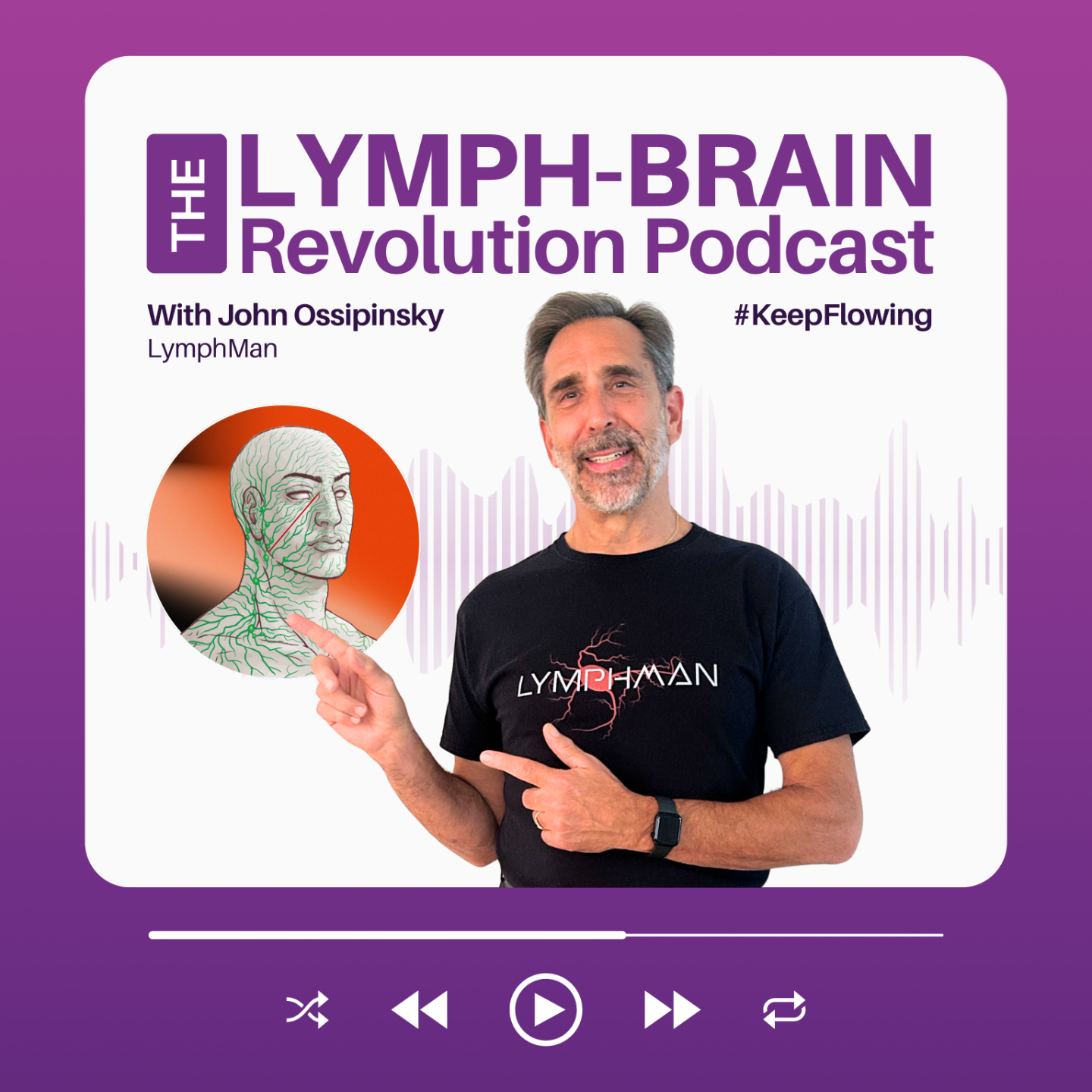
Episode 9: Gain Control Over Anxiety Attacks: The Missing Lymph-Brain Connection
Part of The Lymph-Brain Revolution Podcast with
John Ossipinsky (LymphMan)
Published on: January 28, 2026
Season: 1 Episode: 9
Listen to This Episode
Episode Summary
Anxiety attacks don’t happen because you’re weak, broken, or failing.
In Episode 9 of The Lymph-Brain Revolution Podcast, John Ossipinsky (LymphMan) explains why anxiety and panic attacks often persist because the body can’t efficiently relieve internal pressure, clear metabolic waste, and regulate the nervous system.
Most people try to manage anxiety with mindset, breathing, and distraction alone. But when lymphatic flow is restricted—especially in the neck and upper chest—pressure and waste can build in the body and brain. That can contribute to breathlessness, chest tightness, brain fog, and waves of panic, even when life “looks fine” on the outside.
This episode reframes anxiety as a physiological pressure and drainage problem, and gives you simple steps to help your body release pressure and regain control—starting with opening lymph flow first.
Key Takeaways From This Episode:
-
Anxiety attacks are often a physiological pressure problem, not a personal failure
-
Overactive stress circuits can increase lactate and contribute to brain acidity
-
Acidic shifts in the brain can amplify fear signals and “false alarms”
-
Restricted lymphatic drainage can keep pressure and waste from clearing efficiently
-
Breathing helps more when flow is open first
-
The LymphMan Shoulder Shuffle helps open the major lymph vessels in the neck and chest
-
Self-drainage of the sides of the neck can support calm, clear regulation
-
Consistency reduces “pressure rebuilding,” which reduces anxiety waves
In This Episode, You’ll Learn
-
What’s happening in the body during anxiety and panic attacks
-
Why anxiety can cause chest tightness, breathlessness, brain fog, and digestive symptoms
-
How excess neural activity can produce lactate and contribute to brain acidity
-
Why the nervous system reacts to internal pressure like it’s danger
-
How the lymph-brain connection may influence anxiety and panic patterns
-
Why relief without drainage often doesn’t last
-
How to use the LymphMan Shoulder Shuffle to open flow and reduce pressure
-
A simple, repeatable sequence to help regain control when anxiety rises
Timestamps
00:00 Intro & Opening Hook
01:20 Why Anxiety Keeps Coming Back
04:30 What an Anxiety Attack Really Is (Physiology)
08:20 What Happens in the Body During Anxiety & Panic
12:40 Chest Tightness, Breathlessness & Brain Fog Explained
16:30 Excess Neural Activity, Lactate & Brain Acidity
20:40 Why the Brain Interprets Pressure as Danger
23:50 The Lymph-Brain Connection in Anxiety
26:40 Why We Open Flow First (LymphMan Shoulder Shuffle)
29:10 Self-Lymphatic Drainage & Relaxed DEEP Breathing
31:30 Actionable Tips & How to Regain Control
33:00 Closing Message & Call to Action
Studies Mentioned:
- National Institutes of Health (2023): The emerging importance of lymphatics in health and disease: an NIH workshop report
- Obesity-Induced Cellular Senescence Drives Anxiety and Impairs Neurogenesis (2019): A Mayo Clinic study in mice showed that reducing Senescent, Zombie cells alleviated anxiety.
-
Brain Acidity & Mental Health (2024): Brain acidity linked to multiple neurological disorders
Enjoyed This Episode?
If this episode helped you understand your health and the lymphatic system better, please:
✔ Subscribe on your favorite podcast platform
✔ Leave a review where you listen to the podcast — it helps others discover the show
✔ Share this episode with someone who needs it
Together, we’re changing the world’s health — one lymphatic system at a time.
Keep Flowing 💚 — @LymphMan
The information shared on this podcast and website is for educational and informational purposes only and is not intended as medical advice. It is not a substitute for professional medical diagnosis, treatment, or care. Always consult your physician or qualified healthcare provider regarding any medical condition or health concern.